
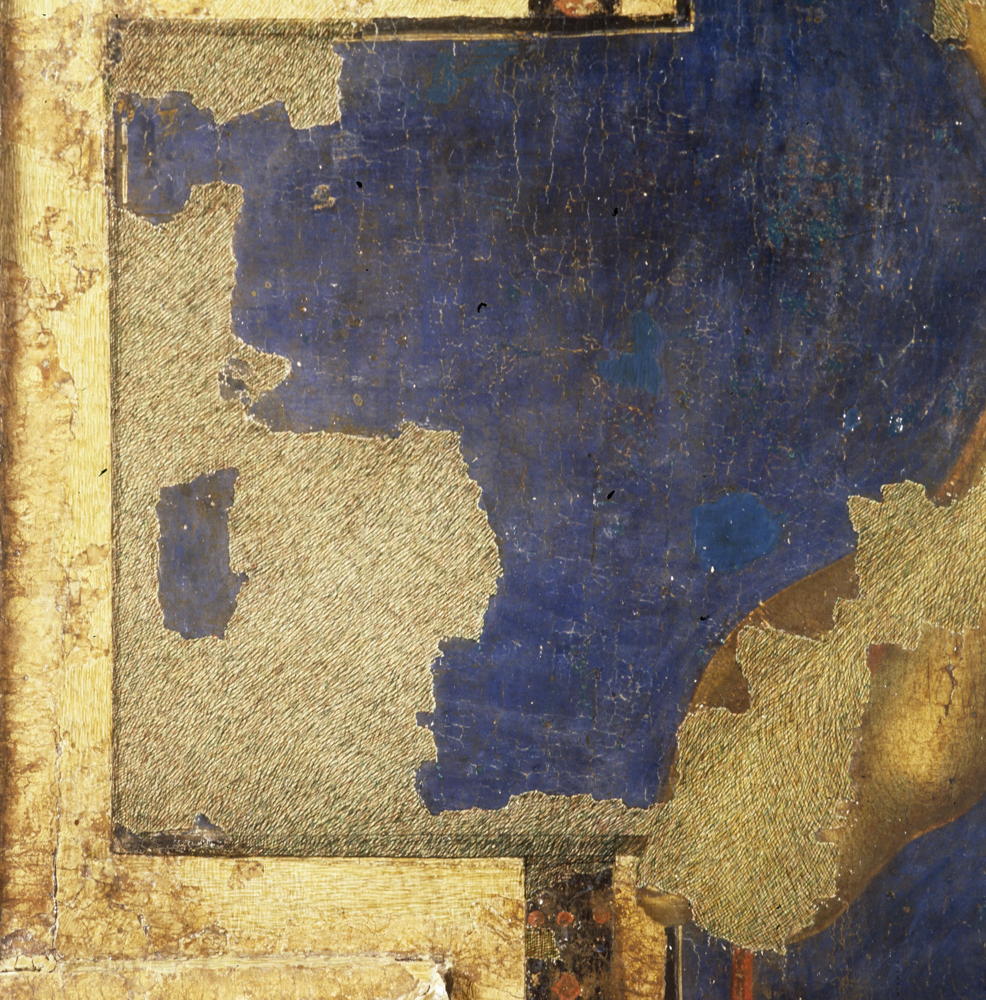
CFP: Lacuna. Conservation, Law, and the Ethics of the Incomplete Information at Rome, Bibliotheca Hertziana, Dec. 2-5, 2026
In conservation practice, a lacuna is a site of rupture – a gap in the painted surface where figure and ground have been severed, where the material continuity of a work has been broken. Conservators have long understood this rupture as a form of violence, a visual disruption that prevents the viewer from apprehending the work as a coherent whole. Yet the practice they have developed in response is not simply one of repair. Following the foundational principles of Cesare Brandi (1906–1988), the ethical treatment of a lacuna does not seek to erase the gap but to hold it in a condition of productive tension: stabilizing the work, visually bridging the disruption through techniques of abstracted in-painting, while simultaneously insisting that the lacuna remain legible – that its presence continue to testify to the history of damage, loss, and time. This practice demands a particular kind of attention from the viewer. To encounter a conserved lacuna is to be asked to hold a double-visibility: to recognize both the compositional ambitions of the original work and the ongoing life of the object–marked by accident, neglect, structural violence, or iconoclasm. The lacuna does not disappear; it is ameliorated. What remains is neither the fiction of an intact original nor the spectacle of ruin, but something more demanding: a work that carries the evidence of its own history within it. To the art historian, the lacuna operates as a prompt rather than a deficit – an invitation to do cognitive and historical work. It forces an acknowledgment of the condition of the evidence on which the discipline relies, serving at once as testimony of institutional histories of care and neglect. It also compels historiographical reflection, as it carries direct consequences for canon formation. Lacunose works pose a limit to their display within the museum and legibility within art historical discourse. The lacuna works as a site of interpretation as much as a mechanism of exclusion: it prevents works from entering or remaining within the circuits of preservation, study, and value that constitute the canon.
The conference is convened by Caroline Fowler and Francesca Borgo. Following “Wastework” (2023), “Loot & Repair” (2024) and “Rework” (2025), this is the fourth annual initiative organized by the BHMPI Lise Meitner Group Decay, Loss, and Conservation in Art History, furthering the Research Group’s ongoing inquiry into the consequences that different forms of loss, disappearance, and degradation bear for the discipline.
To submit a proposal, please upload the following as PDF documents by May 11, 2026 on our platform: https://recruitment.biblhertz.it:
- title and a 300-word abstract of the proposed paper
- brief CV (max 2 pages, including current position and affiliation)
For more information: https://www.biblhertz.it/en/cfp-lacuna?c=2376430